Monday
Feb082010

White Fungus

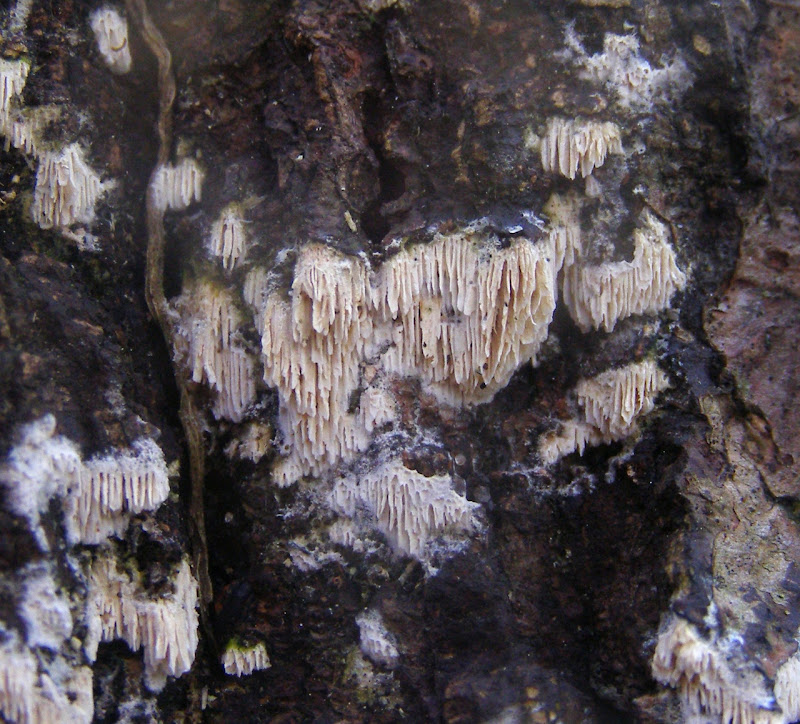
A strange white fungus, possibly Hyphodontia arguta, growing on the decaying stump of a silver birch tree (Betula pendula).  [Note added 2012-12-09: this more likely to be a Schizopora sp, maybe Schizopora paradoxa.]

As I was looking at these pictures again while writing this post, it occurred to me that this might just be the remains of a more 'traditional' form of fungus that has been eaten by some animal, maybe a deer or a rabbit.  However, I have never seen any deer in the area, the fungus is too high for rabbits, and there are no signs of teeth marks on the fungus or tree, and there were no fragments of the fungus on the ground at the foot of the tree.  So I probably have to accept that this is the natural form for this fungus.
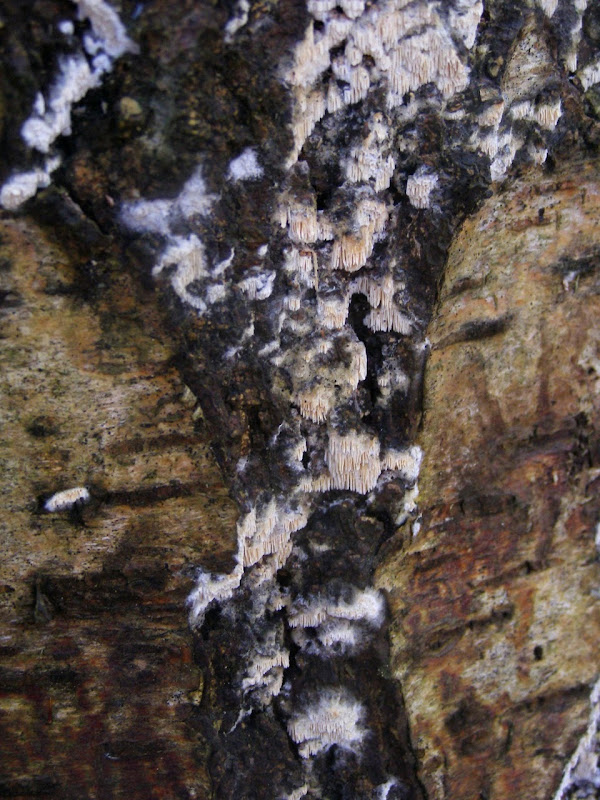
Photos taken in Whiteknights Park, Reading University grounds, Reading, UK, on 2010-01-30.
Sunday
Feb072010

Caterpillar

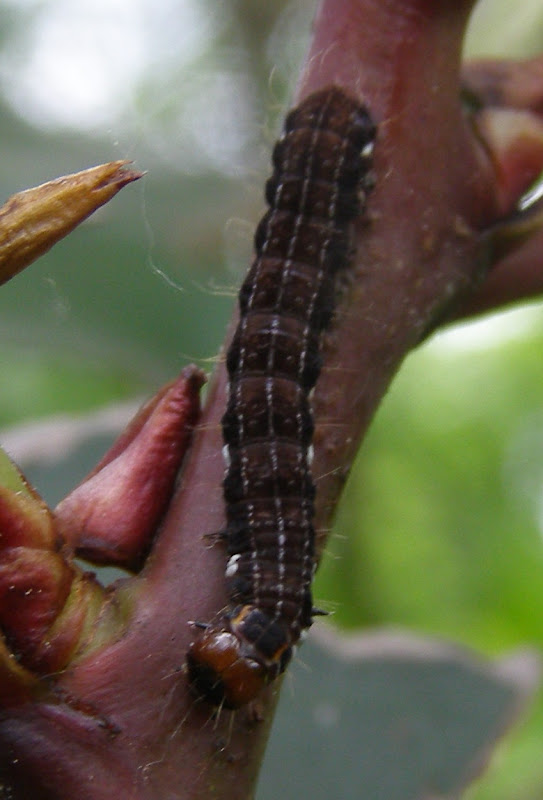
From last spring: a caterpillar, probably the dark form of the powdered quaker moth caterpillar, Orthosia gracilis (Lepidoptera: Noctuidae).

Photo taken in Whiteknights Park, Reading University grounds, Reading, UK, on 2009-05-17.

Saturday
Feb062010

Slime Mould Again

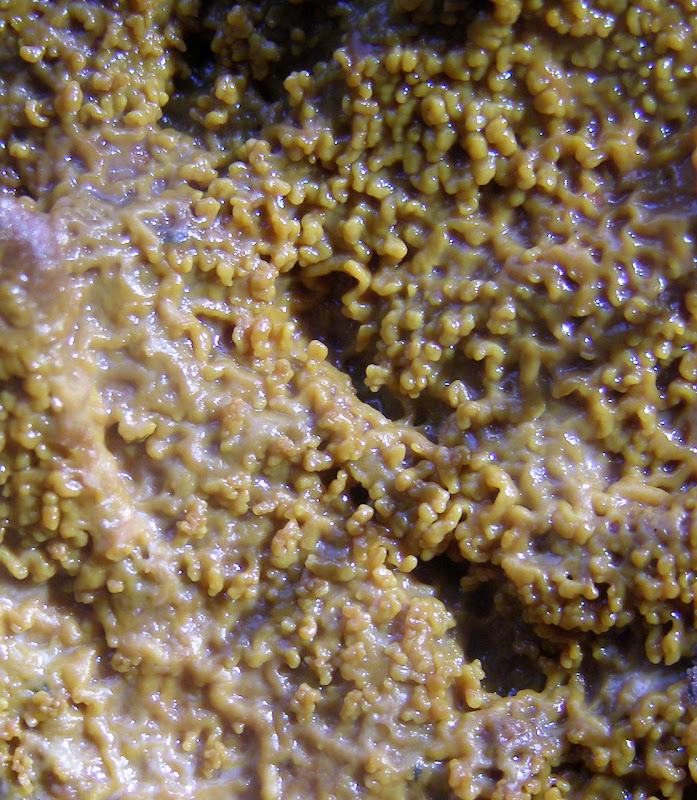
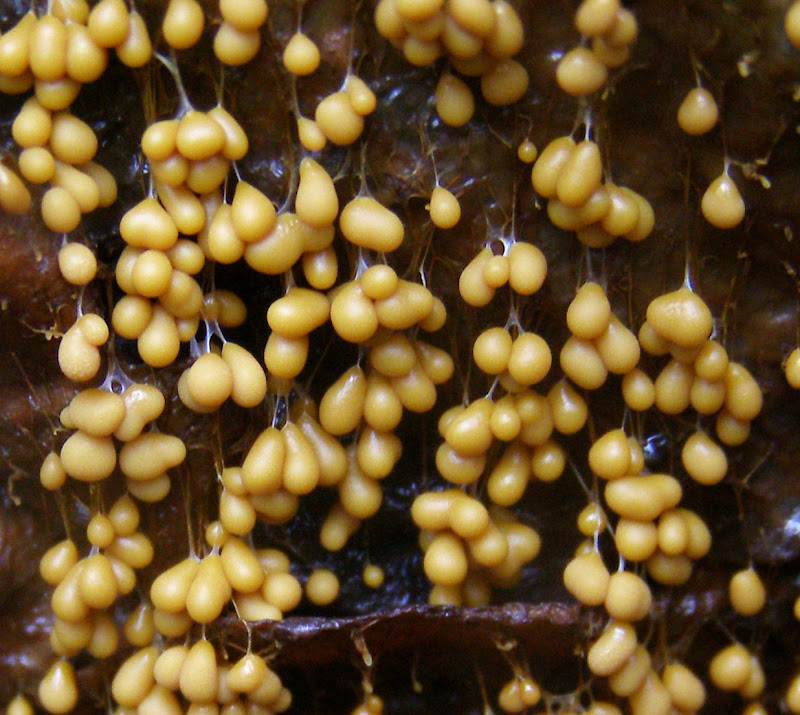
Just as I suspected, the areas of the slime mould plasmodium that a few days ago were covered in little bumps, have now developed into lots of yellow sporangia.  As these ripen they should turn black and then grey.

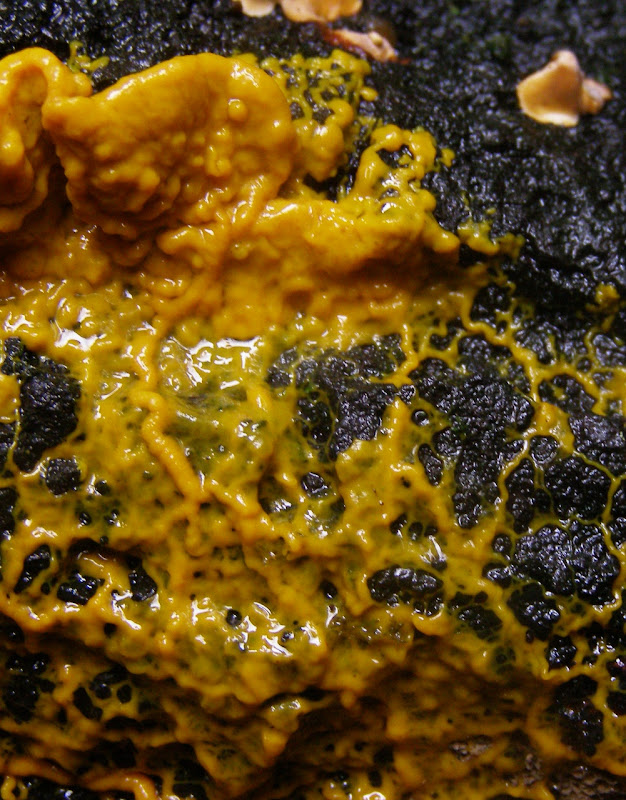
Many of the remaining areas of plasmodium are now turning bumpy:

Photos taken in Whiteknights Park, Reading University grounds, Reading, UK, on 2010-02-05.

Friday
Feb052010

Green Dock Beetles

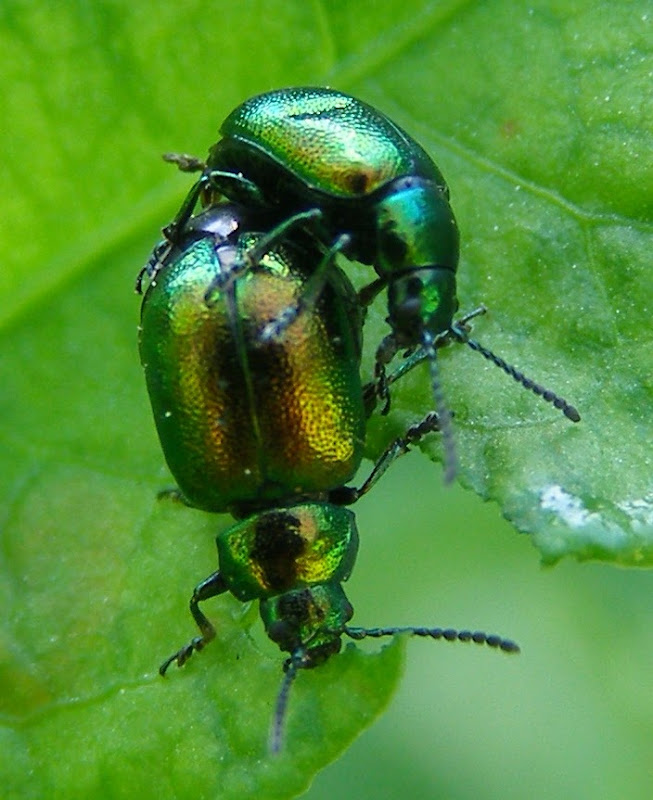
Green dock beetles, Gastrophysa viridula (Coleoptera: Chrysomelidae) on a dock leaf (Rumex sp.).  The large one is a female (with a body too large for its wing cases) and the smaller is a male.

Photo taken in Whiteknights Park, Reading University grounds, Reading, UK, on 2009-06-02.

Thursday
Feb042010

Slime Mould Update

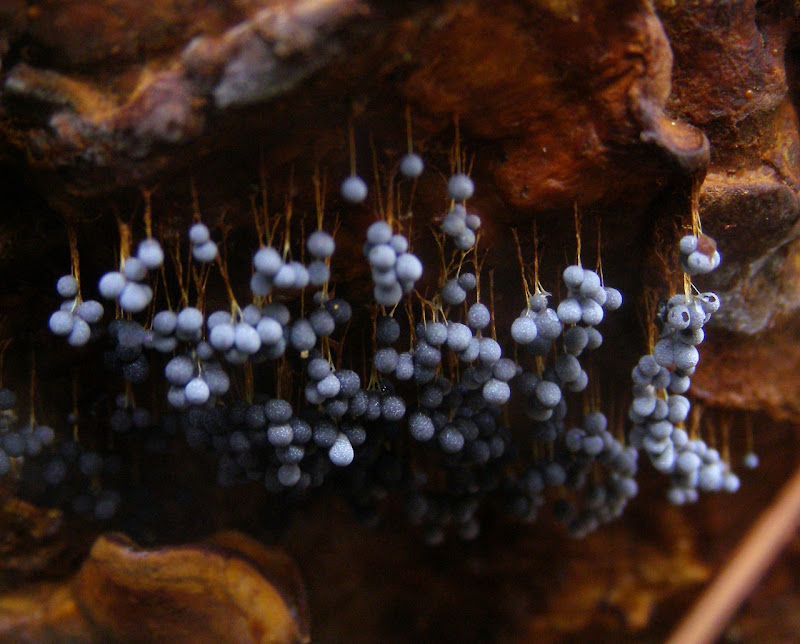
The slime mould sporangia from a few days back have now taken on a more definite grey colour, which is consistent with an identification of Badhamia utricularis.  One or two sporangia even appear to have burst, releasing their spores.

While the yellow plasmodium has withered where the sporangia have developed, it is still thriving on other parts of the same log, as well as on nearby logs:

Photos taken in Whiteknights Park, Reading University grounds, Reading, UK, on 2010-02-03.