Thursday
Apr222010
Mirid Bug
 Thu 2010-04-22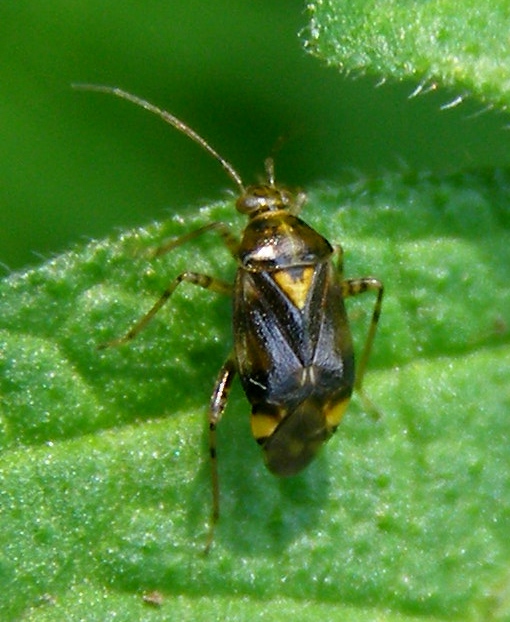
A small mirid bug, probably Liocoris tripustulatus (Hemiptera: Miridae).
Photo taken in Whiteknights Park, Reading University grounds, Reading, UK, on 2010-05-15
Thu 2010-04-22
A small mirid bug, probably Liocoris tripustulatus (Hemiptera: Miridae).
Photo taken in Whiteknights Park, Reading University grounds, Reading, UK, on 2010-05-15
Wed 2010-04-21 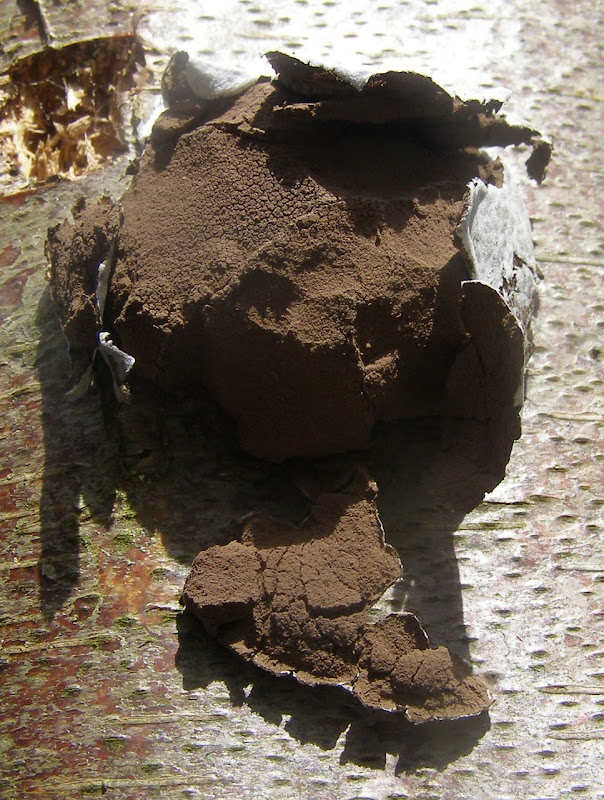
This is the same specimen of slime mould Reticularia lycoperdon (= Enteridium lycoperdon) as here, but two days later. The crust is now burst open exposing the brown spore mass.
Photo taken in the Wilderness, Whiteknights Park, Reading University grounds, Reading, UK, on 2010-04-13.
Tue 2010-04-20 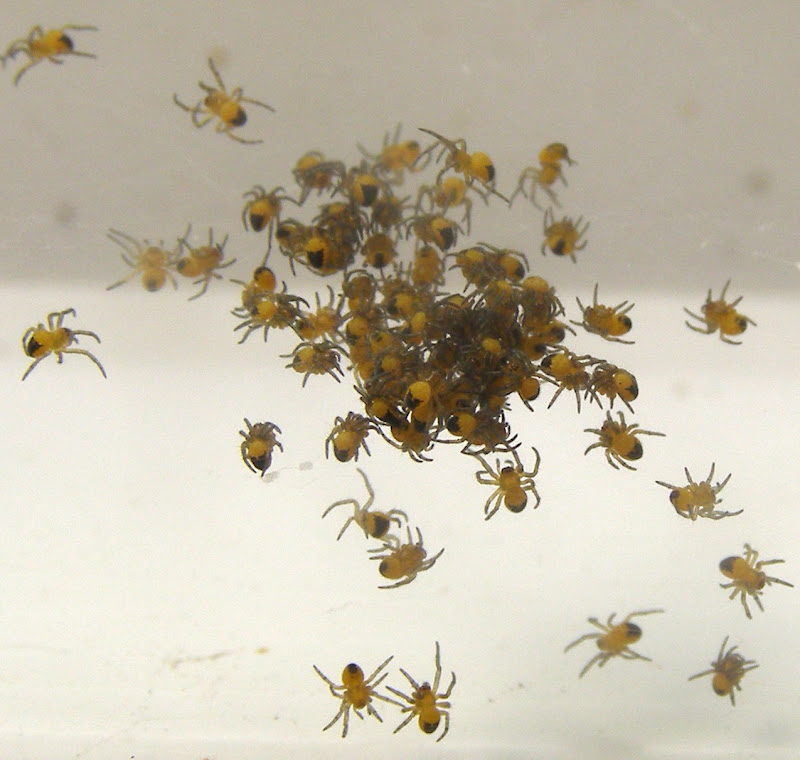
A nest of baby garden spiders (Araneus diadematus) on my bedroom window. I presume these are the offspring of the spider that guarded the same window from late August to October last year.
Photo taken in Reading, UK, on 2010-04-17.
Mon 2010-04-19 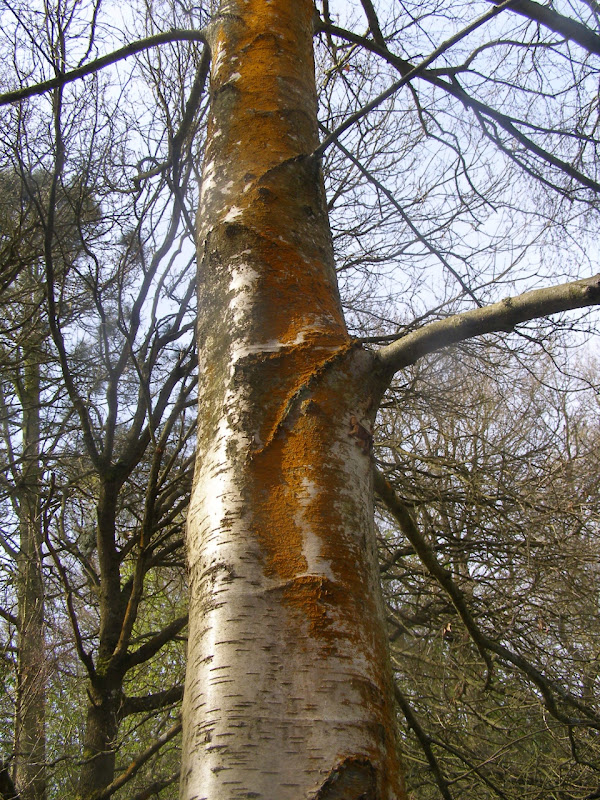
What I think is an alga, possibly Trentepohlia sp., on the trunk of a (living) silver birch tree. Although orange in colour, this is classed as a green alga (Chlorophyta), the chlorophyll green being masked by yellow and red carotenoids.
Photo taken in the Wilderness, Whiteknights Park, Reading University grounds, Reading, UK, on 2010-04-13.
Sun 2010-04-18 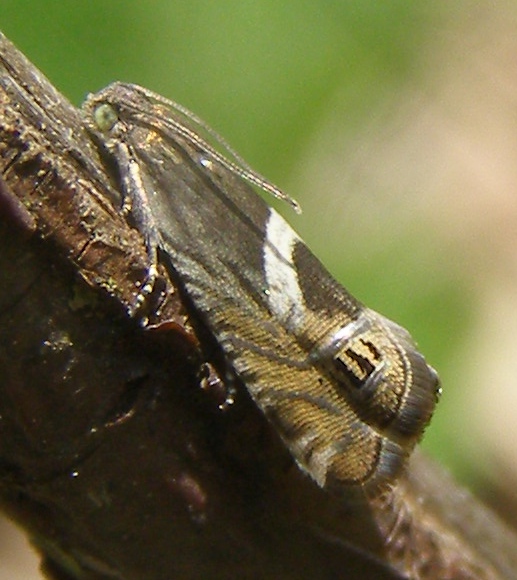
Only about 5mm long. Probably Grapholita jungiella (Lepidoptera: Tortricidae). G. lunulana and G. orobana have similar wing patterns but they are not as common, and they tend to fly only in May to July, while G. jungiella flies in April and May. The larvae of all three species are know to feed on vetch (Vicia sp).
Photo taken in Whiteknights Park, Reading University grounds, Reading, UK, on 2010-04-13.
Tristram Brelstaff
Dichrorampha petiverella also looks very like similar, but I have two reasons for sticking with the identification of Grapholita jungiella. First, the three short black lines at the rear of the wing match G. jungiella better than D. petiverella, which should have just three black spots. Secondly, the above photo was taken in April which matches the G. jungiella flight period of April-May better than the D. petiverella one of May-August.
